

Steel is up 23% this year. Aluminium is up 27%. And a fresh round of furniture tariffs landed on 1 October. If you are pricing a 2027 dormitory, workforce-housing or correctional project, the quote you filed in Q2 is already stale — and the gap is widening every time a steel mill reprices.
We watch input costs because they land straight on our bill of materials. Here is what moved in the last six months, what it means for a bulk bunk-bed order, and the four moves procurement teams are making right now to keep 2027 budgets intact.
1. The cost stack moved all at once
The Bureau of Labor Statistics producer-price data, as reported in the October 2026 Furnishings Digest, puts steel mill products at +23.4% year on year and aluminium mill shapes at +27.3% through August 2026. Plywood and lumber are up low-double-digits; thermoplastic resins used in moulded parts and laminates are up about 7%.
Freight compounds it. Diesel sat near $6.20 a gallon in October after touching $6.53 in September, adding roughly $80–$120 to a typical 1,000-mile truck move. Fuel surcharges are at historic highs. And US furniture output fell 4.4% in 2025 while unit labour costs rose 5.7% — manufacturers are paying more to make less.
| Input | YoY move | Why it lands on a steel bed |
|---|---|---|
| Steel mill products | +23.4% | Dominant material in welded frames and tube |
| Aluminium mill shapes | +27.3% | Extrusions, cast fittings, hardware |
| Plywood / lumber | +10.7% / +7.6% | Packaging crate, optional timber decking |
| Thermoplastic resins | +7.3% | Moulded caps, laminate, glides |
| Diesel (freight) | ~$6.20/gal | Long-haul trucking surcharges at historic highs |
For a welded steel frame, steel is the dominant cost. A 23% move on the dominant input is not a rounding error on the quote; it is the quote.
2. Tariffs just redrew the supplier map
Two changes matter for anyone importing beds into North America. First, USMCA Section 338 tariffs took effect on 19 August 2026, applying a 50% duty to finished furniture and core materials even when they qualify under USMCA — the first time those origin rules have been bypassed for the sector. Canadian-made beds just got far less competitive.
Second, the 1 October 2026 tranche lifted effective rates again. China-origin furniture now lands at roughly 37.5% (25% Section 301 plus a 12.5% forced-labour surcharge); EU goods sit under a 15% ceiling from the July 2026 deal; Vietnam dropped to 12.5% and is the clearest winner. US Customs is also tightening valuation, asking importers to include design and engineering "assists" in declared values — another reason to get the paperwork right the first time.
None of this changes how a bed performs. It changes which factory quote survives contact with the border.
3. What a buyer should lock before the next reprice
A price is only as good as the window it holds. Four moves we see disciplined procurement teams making now:
- Fix the quote validity in writing. Ask for a date-stamped offer that holds 30–60 days, not a verbal "current price".
- Consolidate the MOQ. Beds, lockers and shelving built on the same line can share one container, so you stop paying partial-cube on three shipments.
- Demand the packing plan. Packed CBM per berth and the 40HQ load count turn freight from a guess into a line item. A supplier quoting unit price with no loading plan is handing you the freight risk.
- Quote the certs up front. EN 747 (EU bunk safety), AS/NZS 4220 (Australia/NZ), SGS load-test at the rated kg per berth, and ISO 9001 — written into the PO, not chased after the sailing date.
4. How a direct manufacturer keeps the number honest
We are the factory, not a trading desk. That changes the maths in three ways.
One PO, one cube. The CB-01 anti-tamper welded bunk ships with our BS-03 storage and BS-01 steel shelving on the same line and in the same container, so the freight you already pay does double duty. See the prison bunk bed spec sheet and our certification set.

Knock-down where it pays, welded where it must. For high-density blocks, the BS-03 puts lockable storage under the berth — one SKU instead of a separate locker line. Our school and hostel guides show the layouts.
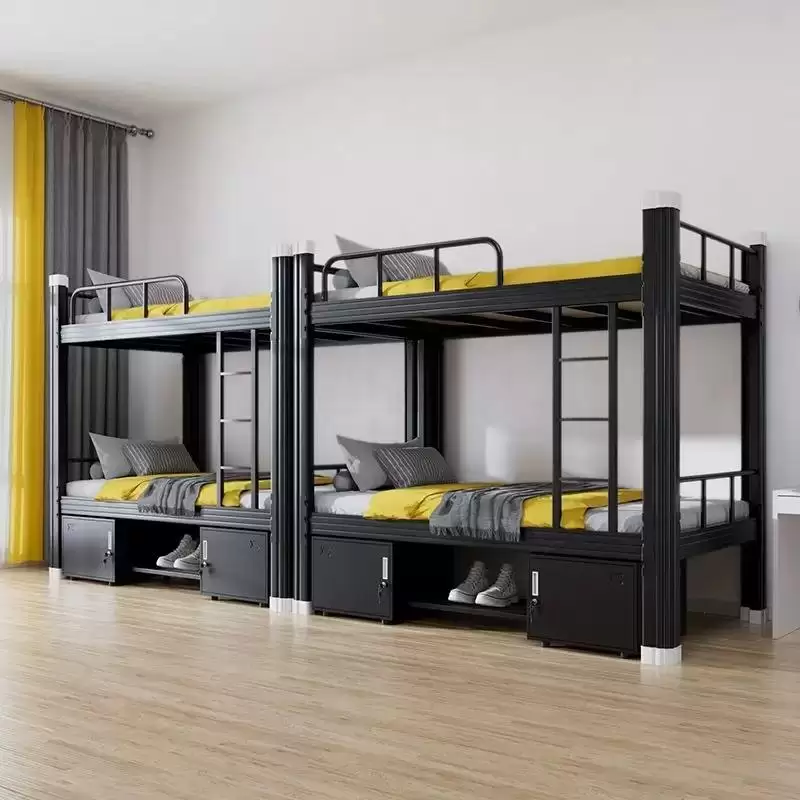
Lead time you can book, not hope. A 40HQ of knocked-down twin bunks is a predictable cube; a welded institutional frame is a fixed volume. Tell us berth count, destination port and the standard you must meet, and we return a loading plan, the cert set and a landed-cost worksheet — usually within one working day. See the dormitory bunk bed guide and our delivered projects.

The short version
Input costs are up and tariffs have redrawn the map, but the buyers who win 2027 are the ones who lock a dated quote, consolidate the container and put the certs in the PO before the next steel reprice. Retail is contracting; project demand is not. The window to price it clean is now.
Send us your berth count, destination port and required standard. We will come back with a loading plan and a landed-cost worksheet — no obligation.
WhatsApp our project desk Email the spec Download the catalogue
Certifications: ISO 9001, CE, EN 747, SGS load-test reports | Delivered projects: reference projects | Contact us
